Keynote 1: Intelligent and Sustainable Energy Systems
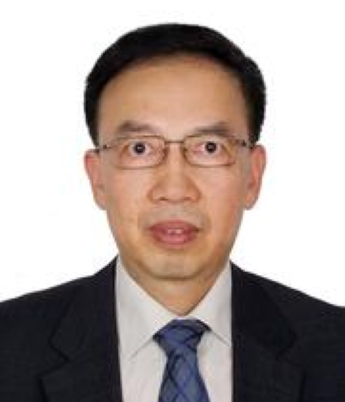
Pr. Zhe Chen
Aalborg University, Denmark
Editor-in-Chief of Energy Engineering Journal
Abstract: Our energy system is undergoing a profound transition toward a clean, sustainable system based on new energy technologies. Electrification is to play a pivotal role in future energy systems, while hydrogen is emerging as a significant energy carrier. Traditional fossil-fuel-based technologies are being replaced by new energy technologies, including wind turbines, photovoltaic (PV) panels, battery energy storage, power-to-hydrogen systems, carbon capture technologies, and EV and Fuel Cell vehicles etc. Power electronic technologies are becoming very important in modern power systems. These advancements of technologies are reshaping the structure and characteristics of modern energy systems, while optimal and secure usage of those energy technologies is also very important for developing a reliable, economic and sustainable energy system. This speech will provide a brief overview of the new energy technologies and discuss the challenges and optimal integration of the new energy technologies and AI’s applications.
Biograhy: Dr Chen is a Professor and the leader of Research Group Power Grids for the Green Transition with the Department of Energy Technology, Aalborg University, Denmark. Professor Chen’s main current research interests are wind energy, power electronics, power system and modern energy systems and AI applications in energy systems. In these areas, he has led many international and national research projects and has supervised many PhD, Postdoctoral researchers and visiting PhDs/scholars, he has more than 1000 technical publications. Dr Chen is a member of editorial boards for many international journals. He is a Fellow of IET, a Chartered Engineer in the U.K., a Life Fellow of IEEE, a member of the Danish Academy of Technical Sciences and a member of European Academy of Sciences and Arts.
Biograhy: Dr Chen is a Professor and the leader of Research Group Power Grids for the Green Transition with the Department of Energy Technology, Aalborg University, Denmark. Professor Chen’s main current research interests are wind energy, power electronics, power system and modern energy systems and AI applications in energy systems. In these areas, he has led many international and national research projects and has supervised many PhD, Postdoctoral researchers and visiting PhDs/scholars, he has more than 1000 technical publications. Dr Chen is a member of editorial boards for many international journals. He is a Fellow of IET, a Chartered Engineer in the U.K., a Life Fellow of IEEE, a member of the Danish Academy of Technical Sciences and a member of European Academy of Sciences and Arts.
Keynote 2: The Flexible Heat Pump Technology: A Quasi–Two-Stage Cycle for Enhanced Efficiency and Broad Applications
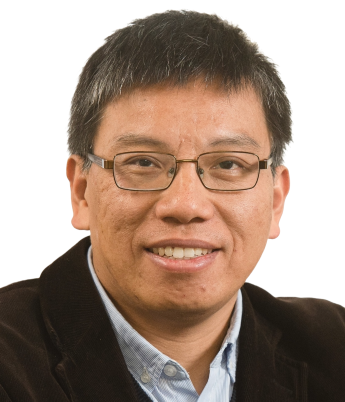
Pr. Zhibin Yu
University of Liverpool, UK
Royal Society Industrial Fellowship
Abstract: Heat pumps are widely recognised as a key technology for decarbonising heat. However, their adoption has been slower than anticipated. Most commercial heat pumps are single-stage systems based on the conventional Evans–Perkins vapour compression cycle, originally developed for refrigeration nearly 200 years ago. As the temperature lift between the heat source and sink increases, their coefficient of performance declines significantly due to throttling losses. In this talk, Professor Yu will provide an up-to-date overview of recent research advances in heat pump technology and introduce his work on the invention and development of the Flexible Heat Pump Cycle, which integrates thermal energy storage into the conventional Evans–Perkins cycle. This innovation enables the recovery, storage, and reuse of otherwise wasted thermal energy from the warm liquid refrigerant leaving the condenser. The new cycle design resembles a two-stage (two-compressor) vapour compression system with subcooling and flash gas removal, offering an innovative solution to the persistent challenge of throttling losses in high-temperature heat pumps. Thermodynamically, the Flexible Heat Pump Cycle effectively creates a quasi–two-stage system that delivers performance comparable to conventional two-stage designs while using only a single compressor. The in-cycle heat recovery and storage not only enhance efficiency but also unlock a range of new application opportunities, delivering significant energy savings and improved operational flexibility.
Biograhy: Professor Zhibin Yu currently holds the Chair of Energy Engineering in the School of Engineering at the University of Liverpool. He is the Head of the Clean Energy and Power Research Cluster within the School and holds a Royal Society Industrial Fellowship (2023–2027). Prior to this, he was Professor of Thermal Energy at the James Watt School of Engineering, University of Glasgow. His research focuses on thermal energy technologies, with particular interest in developing innovative solutions for sustainable heating, cooling, and power generation. His expertise spans heat pumps, refrigeration, energy storage, organic Rankine cycle, thermoacoustics, etc. He has published over 200 research papers and developed the Flexible Heat Pump Cycle (PCT: WO2022069581A1). He currently serves as Associate Editor for Applied Energy (Elsevier) and npj Thermal Science and Engineering (Springer Nature), Subject Editor for Applied Thermal Engineering (Elsevier), and Section Editor-in-Chief for Frontiers in Thermal Engineering. He also sits on the editorial boards of Energy Reports (Elsevier) and the International Journal of Green Energy (Taylor & Francis).
Biograhy: Professor Zhibin Yu currently holds the Chair of Energy Engineering in the School of Engineering at the University of Liverpool. He is the Head of the Clean Energy and Power Research Cluster within the School and holds a Royal Society Industrial Fellowship (2023–2027). Prior to this, he was Professor of Thermal Energy at the James Watt School of Engineering, University of Glasgow. His research focuses on thermal energy technologies, with particular interest in developing innovative solutions for sustainable heating, cooling, and power generation. His expertise spans heat pumps, refrigeration, energy storage, organic Rankine cycle, thermoacoustics, etc. He has published over 200 research papers and developed the Flexible Heat Pump Cycle (PCT: WO2022069581A1). He currently serves as Associate Editor for Applied Energy (Elsevier) and npj Thermal Science and Engineering (Springer Nature), Subject Editor for Applied Thermal Engineering (Elsevier), and Section Editor-in-Chief for Frontiers in Thermal Engineering. He also sits on the editorial boards of Energy Reports (Elsevier) and the International Journal of Green Energy (Taylor & Francis).
Keynote 3: Smart Microgrid and Digital Twin (Stability and Sustainability with High RES Penetration)

Pr. Ahmad Harb
North Carolina A&T State University (NCAT), USA
German Jordanian University, Jordan
Abstract: Smart Microgrid: Renewable Energy Sources (RES) such as solar energy (PV) and Wind energy are been widely used in most of power systems all over the world. No doubt that connecting such renewable energy sources to power grid is something good in many aspects, but in other hand, RES might harm the power systems stability. So, in this presentation, the impacts of RES on the power system stability will be discussed and give some solutions to avoid any kind of stability problems. As solutions, we studied the impacts of Energy Storage Systems (ESS), either static or dynamic. Static ESS (Battery Storage System, BSS), and dynamic (Hydro-Pump Storage Systems, HPSS). To have sustainable power grid, one can use microgrid with RES and use the AI and Machine learning to have a smart microgrid and eventually to have a Digital Twin (DT) virtual microgrid. What is DT? Digital Twins: Before talking about Digital Twins (DT), one should understand what a smart power system means? Smart power system consists of three major layers. First layer is the fundamental power system, that includes: Generations (conventional or renewable energy sources), Transformers, Transmission Lines, Distribution Lines, and Loads, in addition to that, accessories devices for protection and monitoring the systems, such as: Protection relays, meters for voltage, current, power, and frequency. Second layer is the Information Communication Technology (ICT) layer, that includes: Smart metering, Real time monitoring, Grid balancing, and Demand Management. The third layer is the Market layer, that includes: Tariff and pricing, Retail, Bidding, and Wholesale.
BiograhyDr Ahmad M. Harb, Full Professor, receive his Ph.D. degree from Virginia Tech., Virginia, USA, in 1996. Curently, he is a Professor at German Jordanian University (GJU). Dr. Harb is IEEE senior member and PE. Dr. Harb was the dean of Natural Resources Engineering at German Jordanian University (2011-2013). Dr. Harb is the founder and Editor-in-Chief for the International Journal of Modern Nonlinear Theory and Application, IJMNTA. Dr. Harb has published more than 115 journal articles and conference proceedings. Currently, Dr. Harb spent his sabbatical leave at University of California at Los Angeles (UCLA) at Smart Grid Center (SMERC), and unpaid leave as Program Manager (PM) of the Artificial Intelligence (AI) and Clean Energy at North Carolina A&T State University (NCAT). His research interests include power system stability, renewable energy, energy storage, smart power grid, artificial intelligence (A.I.), machine learning, power electronics, modern nonlinear theory (Bifurcation and Chaos Theory)..
BiograhyDr Ahmad M. Harb, Full Professor, receive his Ph.D. degree from Virginia Tech., Virginia, USA, in 1996. Curently, he is a Professor at German Jordanian University (GJU). Dr. Harb is IEEE senior member and PE. Dr. Harb was the dean of Natural Resources Engineering at German Jordanian University (2011-2013). Dr. Harb is the founder and Editor-in-Chief for the International Journal of Modern Nonlinear Theory and Application, IJMNTA. Dr. Harb has published more than 115 journal articles and conference proceedings. Currently, Dr. Harb spent his sabbatical leave at University of California at Los Angeles (UCLA) at Smart Grid Center (SMERC), and unpaid leave as Program Manager (PM) of the Artificial Intelligence (AI) and Clean Energy at North Carolina A&T State University (NCAT). His research interests include power system stability, renewable energy, energy storage, smart power grid, artificial intelligence (A.I.), machine learning, power electronics, modern nonlinear theory (Bifurcation and Chaos Theory)..